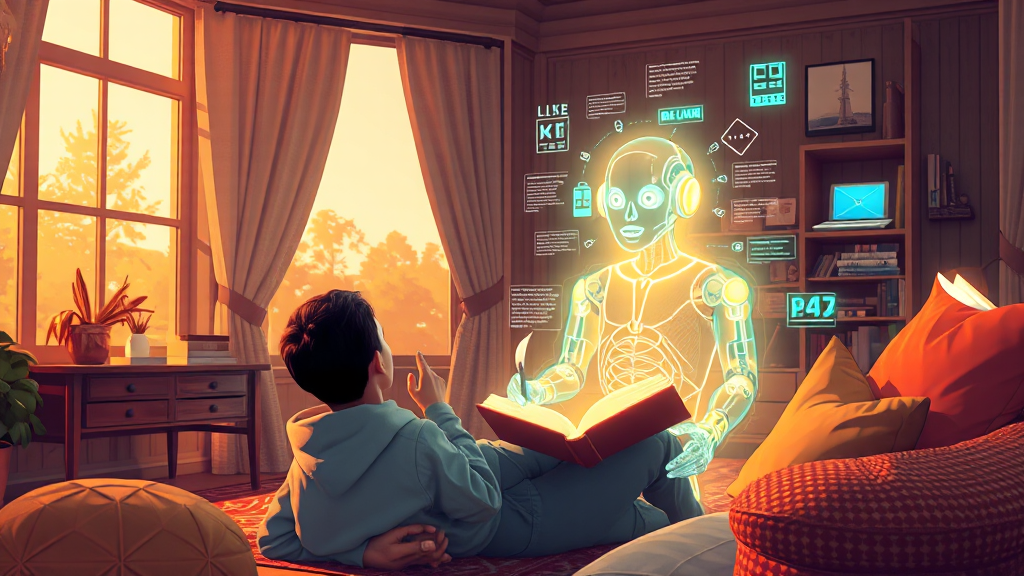
CrushOn.AI: A Practical Guide to AI Companion Chat in 2025
Conversational AI has moved far beyond simple question-and-answer tools. A growing category of platforms now focuses on open-ended, personality-driven dialogue, and one of the most discussed names in that space is CrushOn.AI. Instead of treating every exchange as a task to complete, this kind of platform treats conversation itself as the product: you pick or shape a character, and the dialogue unfolds over time. For anyone curious about how AI companion chat actually works in daily use, this guide walks through the concept, the features that matter, and the practical habits that make the experience better.
It is worth saying up front that this is not a tool for writing code, summarizing documents, or automating a business workflow. It is a social and creative space. Understanding that distinction helps you judge whether it fits your interests — and helps you use it in a way that feels natural rather than forced.
What AI Companion Chat Actually Is
Traditional chatbots are optimized for accuracy. You ask a factual question, you get a factual answer, and the interaction ends. AI companion platforms flip that priority. The goal is continuity, tone, and personality. The model is asked to stay in character, remember what was said earlier in the conversation, and respond in a way that feels emotionally coherent rather than encyclopedic.
In practice, this means a few things. First, responses tend to be longer and more expressive. Second, the system usually maintains some form of memory so that a character does not forget the context you established ten messages ago. Third, the user is given more control over who they are talking to — you are not limited to one generic assistant voice. You can browse a library of characters with different backgrounds, speaking styles, and moods, or in many cases create your own from scratch.
This design choice is what separates the category from general-purpose assistants. It also explains why the audience skews toward people interested in storytelling, roleplay, language practice, and low-pressure social interaction rather than productivity.
Why People Use Platforms Like CrushOn.AI
The reasons people gravitate toward this style of chat are more varied than outsiders assume. Some are creative writers who want to test dialogue before committing it to a script or novel. Talking to a character that responds in real time can surface phrasing and personality quirks that are hard to generate on a blank page.
Others use it for companionship during quiet periods — long commutes, late nights, or stretches of time alone. The appeal is not that the AI replaces human relationships, but that it offers a judgment-free space to talk without scheduling pressure. A third group treats it as a language or conversation practice tool, using characters with different speech patterns to rehearse phrasing in a low-stakes setting.
There is also a purely exploratory motivation. Many users simply want to understand what modern conversational AI feels like when it is not constrained to a help-desk script. They try a few characters, notice how memory and tone shift between them, and form their own opinion about where the technology is heading.
Core Features That Shape the Experience
Not every platform in this category is built the same way, but the strongest ones tend to share a recognizable feature set. Understanding these elements helps you evaluate any tool you try, including CrushOn.AI.
Character variety and discovery
A large, browsable roster of characters is usually the entry point. Categories, tags, and search filters make it easier to find a personality that matches your mood — whether that is a calm conversationalist, a witty sparring partner, or a fictional archetype. The breadth of the library often determines how long the platform stays interesting.
Memory and conversation continuity
Memory is the feature that separates a satisfying chat from a frustrating one. If a character forgets your name, your backstory, or the tone you established, immersion breaks immediately. Good implementations retain context across a session and sometimes across sessions, so returning to a character feels like resuming a conversation rather than starting over.
Custom character creation
For users with a specific idea in mind, custom creation tools let you define a persona: name, description, greeting, and behavioral traits. This is where the platform becomes a creative instrument rather than just a catalog. The quality of the creation interface — how much guidance it gives and how clearly it explains each field — has a large impact on results.
Interface and accessibility
A clean chat interface, fast response times, and sensible mobile behavior matter more than they sound. Companion chat is often used in short, frequent sessions, so friction in the UI compounds quickly. Platforms that load fast and keep the conversation front and center tend to retain users better than feature-heavy interfaces that bury the chat.
How to Get Better Results From AI Chat
One of the most common complaints about AI companion platforms is that responses feel flat or repetitive. In most cases, the issue is not the model alone — it is how the conversation is framed. A few habits reliably improve output quality.
Start by giving the character something to work with. A message like “hi” produces a generic reply because there is nothing specific to respond to. A message that mentions a setting, a mood, or a question gives the model material to build on. The same principle applies to custom characters: the more concrete the description, the more consistent the personality.
Second, stay in the frame you established. If you set up a scene, keep referencing it. If you defined a character as formal, avoid switching to casual slang and expecting the AI to follow. Consistency from the user side usually produces consistency from the AI side.
Third, use the tools the platform provides. If there are options for adjusting response length, tone, or creativity, experiment with them. Small parameter changes often have a visible effect on how natural a conversation feels.
Finally, treat early conversations as calibration. The first dozen messages are where you learn how a particular character behaves. Adjust your approach based on what you observe rather than assuming every character will respond the same way.
Privacy, Safety, and Responsible Use
Any platform that hosts personal conversations deserves scrutiny. Before committing time to an AI companion service, it is reasonable to check what the privacy policy says about data handling, whether conversations are stored, and what controls exist for deleting history. These details vary widely across the category, and they matter more here than in a tool you use only for math homework.
It is also worth being honest about the limits of the experience. An AI companion can be engaging, supportive, and surprisingly coherent, but it is not a substitute for professional mental health support or for human relationships. Users who approach it as entertainment, creative practice, or casual conversation tend to have the healthiest experience. Those who expect it to resolve loneliness or provide clinical guidance are likely to be disappointed.
Age appropriateness is another consideration. Many platforms in this space set minimum age requirements and content guidelines, and those rules exist for good reasons. Respecting them keeps the ecosystem usable for everyone.
How This Fits Into the Broader AI Landscape
The rise of companion-style chat is one of the more interesting developments in consumer AI. While enterprise tools compete on accuracy and integration, companion platforms compete on immersion and personality. That is a fundamentally different design problem, and it has pushed developers to invest heavily in memory systems, character consistency, and natural language nuance.
Those advances tend to spill over. Techniques developed to keep a fictional character coherent for hundreds of messages also improve long-context handling in more serious applications. In that sense, even users who never touch a companion platform benefit indirectly from the research happening in this corner of the field.
For users, the practical takeaway is simpler: the category is maturing quickly, and the quality gap between platforms is widening. Trying one or two options and comparing them directly is the fastest way to understand what current technology can and cannot do.
Frequently Asked Questions
Is CrushOn.AI free to use?
Many platforms in this category offer a free tier with limits on messages, features, or character access, alongside paid options that unlock more. The specific structure can change over time, so checking the official site is the most reliable way to see current pricing and limits before you invest time.
Do I need technical skills to create a character?
No. Custom character creation is typically form-based: you fill in a name, a description, a greeting, and some personality traits. The skill involved is more about clear writing than technical knowledge. Users who write specific, vivid descriptions generally get more consistent characters.
Will the AI remember previous conversations?
Memory varies by platform and sometimes by character or plan level. Many services retain context within a session and offer some form of longer-term memory, but the depth of that memory is not unlimited. If continuity matters to you, it is worth testing it early with a simple detail and checking whether the character recalls it later.
Is it suitable for creative writing and roleplay?
Yes — that is one of the primary use cases. Writers use companion chat to test dialogue, explore character voices, and break through blocks. Treating the AI as a collaborative improvisation partner rather than a finished draft tends to produce the best results.
What should I check before signing up?
Review the privacy policy, the content guidelines, the age requirements, and the pricing structure. Also look at how easy it is to delete conversations and manage your account. These details tell you more about a platform’s long-term fit than any feature list.
Final Thoughts
AI companion chat is a distinct and fast-evolving corner of consumer technology, and platforms like CrushOn.AI sit at the center of that trend. The appeal is easy to understand once you try it: a space where conversation is the point, characters have continuity, and the experience adapts to your interests rather than the other way around. Whether it becomes a regular habit or a brief experiment, it offers a useful window into how natural and personable AI dialogue has become — and where it is likely to go next.